
Preclinical positron emission tomography (PET) imaging is a powerful and highly sensitive modality for investigating molecular and functional processes in vivo. This non-invasive technology enables longitudinal monitoring of biological changes in animal models, providing critical insights into disease progression and therapeutic response.
Using specialized radiotracers, PET imaging allows quantitative assessment of key physiological processes, including:
- Cerebral glucose metabolism
- Tumor metabolism and proliferation
- Neuroinflammation
- Receptor binding and occupancy
- Cerebral blood flow
Available radiotracers
| Radiotracer | Biological target | Application | Area |
|---|---|---|---|
| [¹⁸F]FDG | Glucose metabolism | Measurement of metabolic activity of tumors and cerebral function | Oncology & Neurolgy |
| [¹¹C]ABP688 | mGluR5 (metabotropic glutamate receptor 5) | Evaluation of glutamatergic signaling and receptor occupancy | Neuroscience |
| [¹¹C]DTBZ | VMAT2 (vesicular monoamine transporter 2) | Assessment of dopaminergic neuron integrity | Neuroscience |
| [¹¹C]PK11195 | TSPO (Translocator Protein) | Imaging of neuroinflammation | Neuroinflammation |
| [¹¹C]PiB | β-amyloid plaques | Imaging amyloid plaques | Alzheimer’s disease |
| [¹⁸F]AZD4694 | β-amyloid plaques | Imaging amyloid plaques | Alzheimer’s disease |
| [¹⁸F]Flortaucipir | Tau neurofibrillary tangles | Imaging tau pathology | Alzheimer’s disease |
| [¹⁸F]MK6240 | Tau aggregates | Imaging tau pathology | Neurodegenerative diseases |
| [¹⁸F]PI2620 | Tau aggregates | Imaging tau pathology | Neurodegenerative diseases |
Our PET imaging platform supports studies in neuroscience, oncology, cardiology, and metabolic diseases, providing highly reproducible quantitative data that help guide preclinical decision-making and translational research.
Example imaging
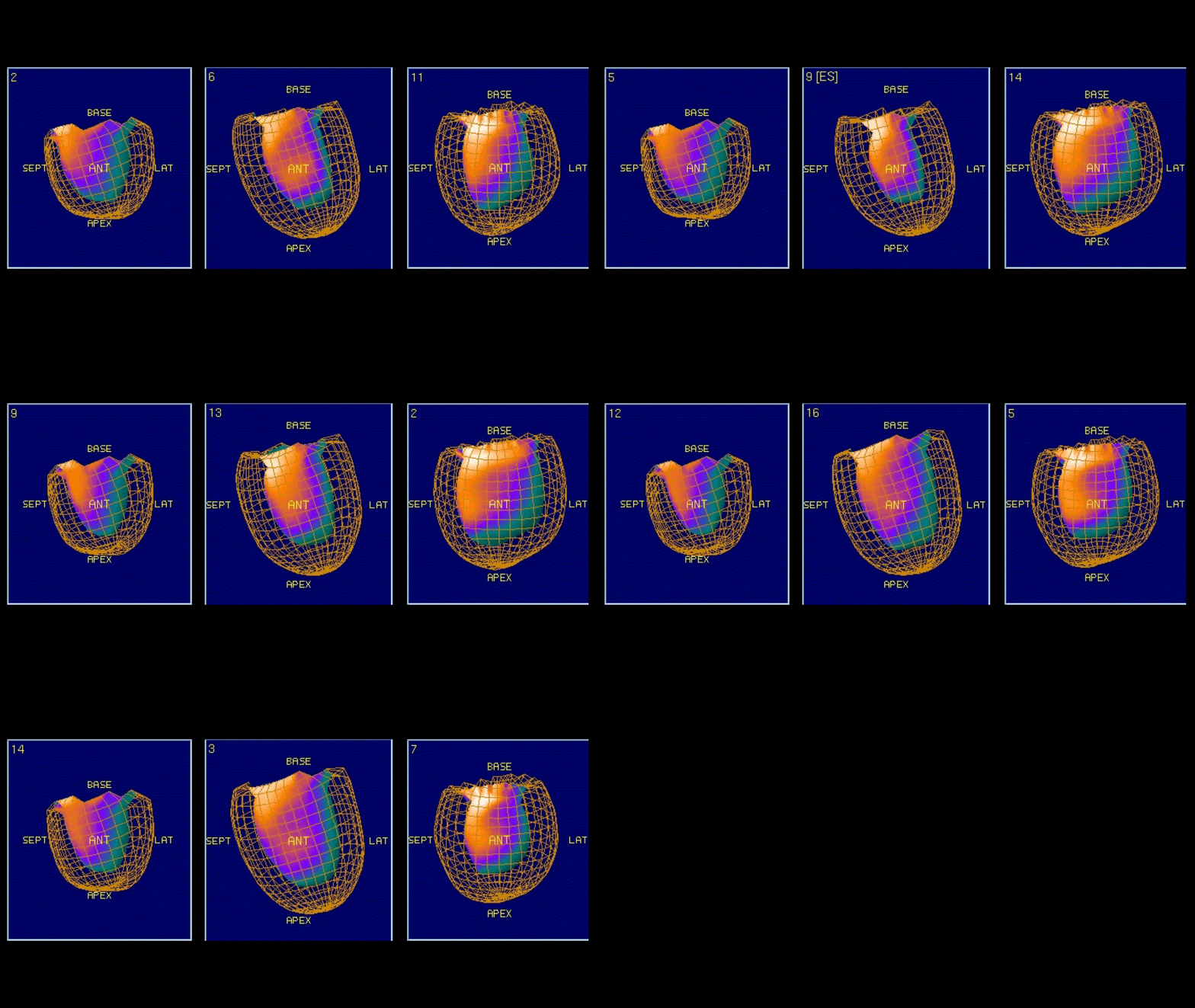
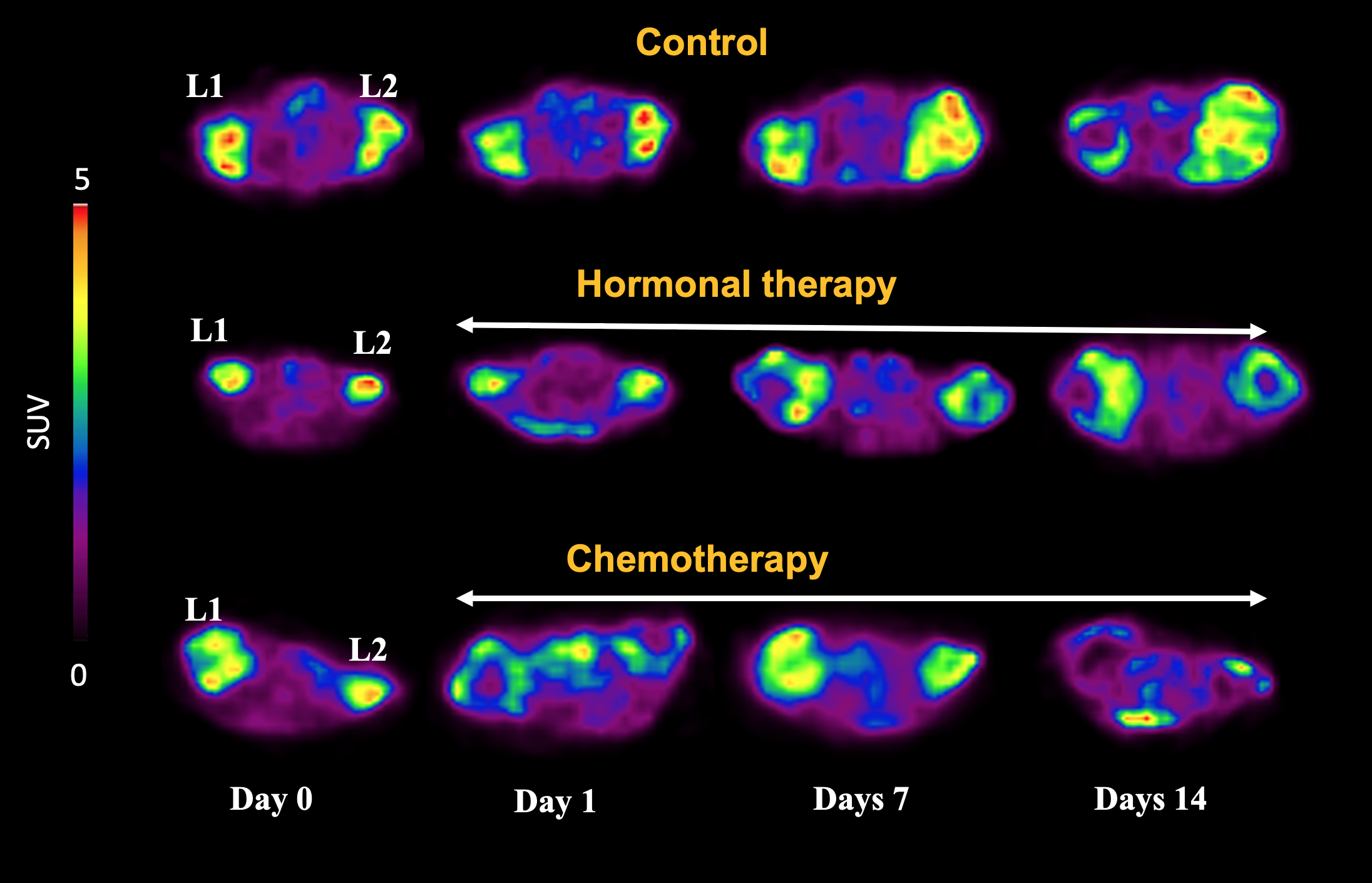
Imagery on this site illustrates imaging methods and capabilities from Modivio scientific materials. It is not a publication of client study results.